Context
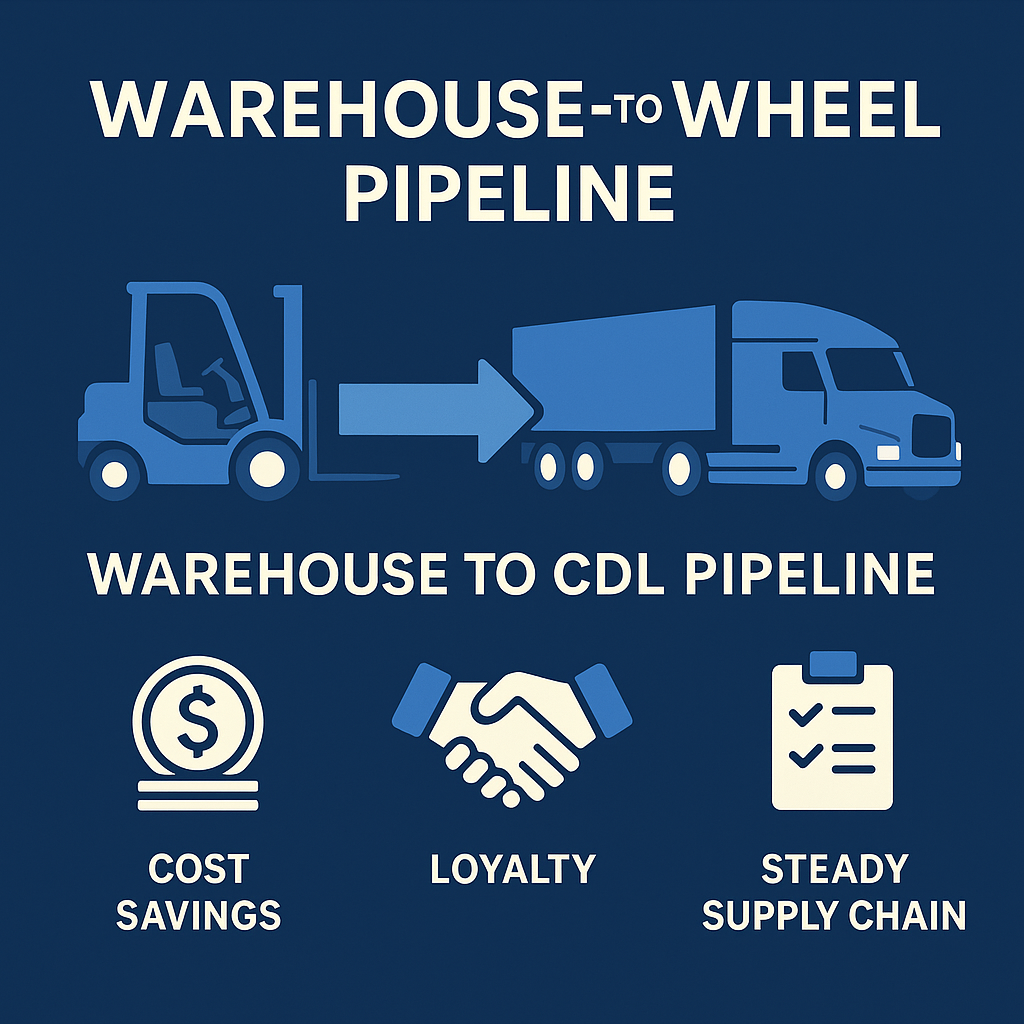
In the contemporary logistics-dominated market, firms are stuck in the deep end with a lack of qualified truck drivers while warehouse operations still produce skilled equipment operators. The way out? Utilize your in-house workforce by framing a warehouse to CDL pipeline that upgrades proficient forklift operators to licensed commercial drivers. This, in turn, allows businesses to lessen the impact on recruitment costs, increase employee loyalty, and sustain steady supply-chain processes. In this article, we will, first of all, give you an overview on the upskilling of forklift operators into the Class A CDL holders, present the key training stages, and lastly, introduce best practices for implementing a scalable tip-off forklift to truck driver program that assists upskill workforce trucking across the industry.
The Obligation of the Sector
- Driver shortage: The American Trucking Associations expects the driver shortage to exceed 80,000 this year.
- Warehouse know-how: Forklift operators already have safety training, material-handling skills, and they are familiar with Logistics software.
- Cost-benefit: An internal hiring policy can save up to 50% on the recruitment costs and maintain the time-to-fill in the market for less than two weeks.
By a transparent pipeline, which links the warehouse to the driver, companies can turn their operational issues into a strategic advantage. Rather than spreading their fishing nets in such a tight labor market, businesses draw on their own reliable employees who are already familiar with the processes, working environment, and company culture.
Main Advantages of the Warehouse-to-Wheel Pipeline
- Fast-Tracking the Onboarding
Forklift operators are well versed in safety protocols, load balancing, and basic vehicle inspections as required. CDL training, in this of building on the initial skills, thereby reducing the total learning curve. - Increased Employee Retention
Career paths within the company spur employee engagement. Operators can see the way to the top, achieving higher salaries, and having more responsibilities, which lowers turnover in both warehouse staff and truck drivers. - Safer Operating Conditions
Operators have a sense of spatial awareness and risk management. The integrating of forklift ops experience with habitual driving practice promotes safe driving culture. - Loyalty to the Brand
Workers that progress within the company develop a stronger commitment. In competitive markets, this helps slightly more so in the staffing level.
Formulating Your Forklift-to-Truck Driver Program

A well-defined pipeline consists of several separate phases. Here is an example roadmap:
| Phase | Description | Duration | Key Deliverables |
| 1. Candidate Identification | Evaluate forklift operators based on attendance, safety record, and interest in driving opportunities. | 1 week | List of qualified candidates |
| 2. Pre-Assessment | Conduct written and practical tests covering basic CDL knowledge and physical fitness requirements. | 2 weeks | Assessment scores, readiness reports |
| 3. Classroom Training | Theory modules on road regulations, logbooks, hours-of-service, and vehicle maintenance fundamentals. | 4 weeks | Completed course certificates |
| 4. Hands-On Training | Behind-the-wheel practice with a certified instructor, covering pre-trip inspections and road skills. | 6–8 weeks | Driving logs, instructor sign-offs |
| 5. CDL Examination | Schedule state administered CDL tests (written and skills). | 2 weeks | CDL license issuance |
| 6. On-The-Job Mentoring | Pair new CDL drivers with experienced mentors for routing, documentation, and professional conduct. | 4 weeks | Mentor feedback, performance evaluations |
This table demonstrates how a comprehensive training program ensures that each forklift ops professional becomes knowledgeable and acquires the practical experiences necessary for the safety of highway driving.
Strategies for Upskilling a Sustainable Workforce
Modular Learning Paths
Pieces of training can be divided into smaller sections that do not interfere with the shift times. An example is to have online courses for the regulatory theory, then dedicate on-site time for vehicle handling.
Blended Delivery
Mix e-learning, classroom sessions, and simulator-based practice. Simulators breathe life into immediacy (“hands-on”), where it is unsafe to play (putting candidates behind the controls).
Financial & Scheduling Support
Offer paid time off, tuition reimbursements, or stipends. In order for many of the material handlers to attend the courses, we must create flexible schedules that do not involve overtime backlash.
Clear Progression & Incentives
Set up milestones (e.g., “Complete Pre-Assessment,” “Pass Written Test”) and acknowledge the progress. A minor reward like gift cards, company merchandise, or recognition could be the motivational factor for learners to remain on track.
Partnerships with CDL Schools
Collaborate with nearby community colleges or vocational schools to co-write the curricula. This is beneficial for the consistency of training, getting qualified personnel, and possibly drawing funding for training programs.
Technology and Data Analytics Integration
- Learning Management Systems (LMS): Watch over the progress of the candidates, shorts, and gather certifications through a common portal to anticipate knowledge gaps before they materialize.
- Telematics & Telematics Data: Once on the road, utilize telematics for monitoring driving patterns (harsh braking, overspeeding) while mentors offer specific coaching for them.
- Virtual Reality (VR) Simulators: These tools are proven for teaching the skills of patience like waiting to back to the docks and take the turns too tightly with the attempt of hitting the cars beside your lane.
Case in Point: Internal Programs Building Success

At Trucking Talent, we supported a mid-sized 3PL provider to start a forklift-to-truck driver initiative. In half a year:
- 45% of the participants got their CDL
- Driver turnover reduced by 30% in the first year
- Recruitment costs dropped by 20% compared to external hires
This program not just made the warehouse to CDL pipeline flow but also created a culture of continuous upskill development on the frontline team.
Monitoring & Improving the Effectiveness of the Program
| Metric | Definition | Target |
| Pipeline Throughput | % of forklift operators enrolling vs. completing training | ≥ 70% |
| Time-to-CDL | Average days from enrollment to CDL issuance | ≤ 16 weeks |
| Driver Retention Rate | % of upskilled drivers still employed after 12 months | ≥ 85% |
| Training ROI | (Cost savings from reduced recruitment) / (Total training investment) | ≥ 150% |
| Safety Incident Rate | Number of at-fault incidents per 100,000 miles driven | Decrease by 10% |
Periodic evaluation through these KPIs should be carried out in regular operation meetings. Also, the course content, scheduling, and support mechanisms can be refined upon receiving feedback from participants and instructors. To ensure you always have qualified drivers ready to step into your program, visit https://truckingtalent.com/hire-truck-driver.
Overcoming Common Challenges
- Resistance to Change
– Solution: Organize information sessions that will demonstrate the benefits for career advancement. Operators can be featured, who have transitioned successfully from forklift to truck driver, through testimonies. - Budget Constraints
– Solution: Look for federal grants or call WIOA funds to help fund the training. Join forces with equipment manufacturers who might give you simulators at a discount. - Scheduling Conflicts
– Solution: Utilize training cohorts on a rotational basis, so that the warehouse will remain manned. Also, use weekends and evenings when necessary.
Future-Proof Your Logistics Workforce
The transportation sector is changing fast. Driverless forklifts, electric vehicles, and digital freight platforms need a workforce that is flexible & proactive with upskill. Through the adoption of a warehouse to CDL pipeline as part of your strategic management of talent, you achieve the following:
- Operational agility enhancement through personnel switching between warehouse and driving roles with no strain.
- Internally developed talent pools who dwarf the need for external hiring.
- Strengthened brand equity as a preferred employer in a competitive market for logistics manpower.
Creative companies will not sadece fill in places, they will create career journeys; from forklift bays to the open highways.
Summary

Designing a strong warehouse-to-wheel pipeline makes companies capable of turning capable forklift operators into professional CDL drivers who drive safety and reliability. With dedicated training, mixed learning strategies, and continuous support, you can upskill trucking workforce and ensure the driver talent crucial for extended operations. Whether you are a 50-truck fleet or a national carrier, the first point lies in discovering the concealed potentials of your warehouse floor. Take your first steps in mapping your forklift to truck driver path today, and see your retention, safety, and bottom line drive upfront to success.
FAQ: Warehouse-to-Wheel Pipeline: Train Forklift Operatives for CDL
- What’s a warehouse-to-CDL pipeline?
A warehouse-to-CDL pipeline is an internal career pathway that takes experienced forklift operators and makes them become licensed Class A commercial drivers by using their safety and logistics skills they already have. - Is the time required for forklift operator training to be a Class A CDL longer than the standard?
The majority of operators go through the complete program—pre-assessment and state-testing included—in 14 to 16 weeks’ time. - What are the reasons for forklift to truck driving upskilling?
Advantages include up to 50 % recruitment cost savings, shorter onboarding time, higher retention, and a stronger safety culture on the roads. - How can a telematics integration contribute to the upscaling process?
Monitoring driving behavior (e.g., harsh braking, overspeeding) provides telematics data, which reveals skills gaps and enables targeted coaching for new CDL drivers. - What rewards effectively persuade operators to enter a forklift-to-truck driver program?
Milestone incentives such as gift cards, tuition reimbursements, and public recognition deliver the biggest engagement boost and motivate on-time progression through training modules. - How can companies train their workers without affecting daily operations?
Implement a modular learning path: combine online theory classes with hands-on cohorts running in rotational shifts to maintain full operational coverage during training. - What is the expected ROI from an internal upskilling pipeline?
Cost savings on hiring and reduced turnover from the training program can enable many companies to achieve 150 %+ ROI within the first year. - What partnerships with local CDL schools can bring about program success?
Co-developing curricula with vocational schools ensures quality course delivery, shared funding, and access to a broader pool of certified trainers.